


































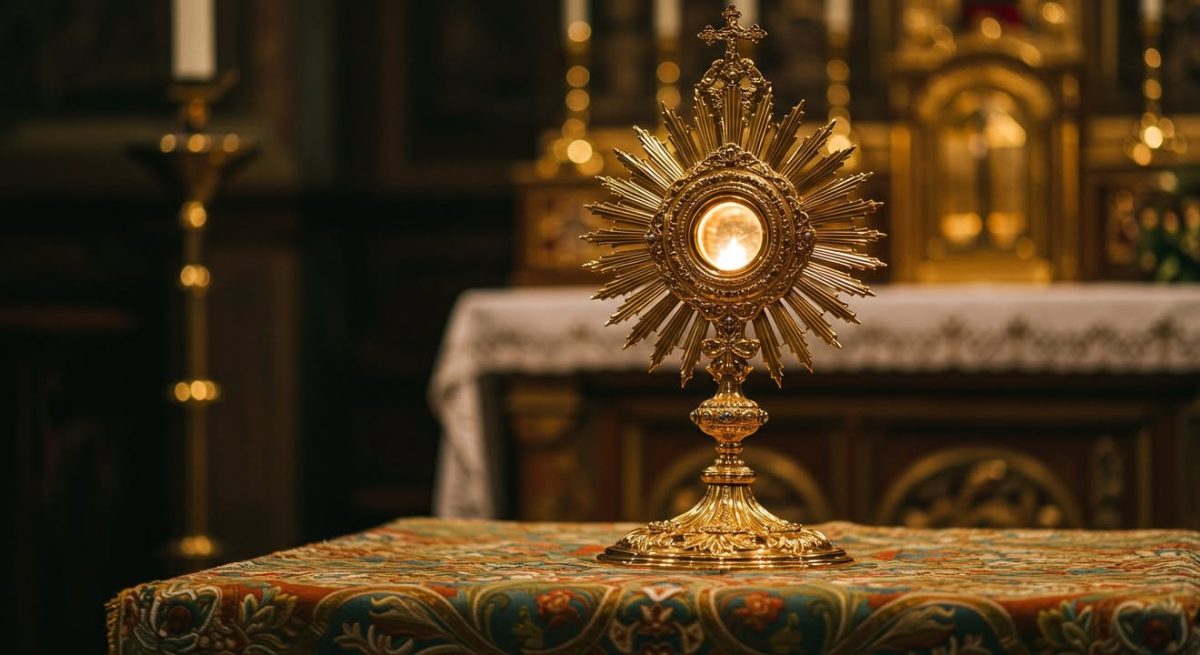
For those unfamiliar, Eucharistic adoration is a longstanding Catholic practice in which the consecrated host — the real presence of Jesus Christ—is displayed for quiet prayer. Unlike Mass, adoration has no set structure or spoken parts; it is simply a time for personal prayer in the presence of the Eucharist. Students who are new to the practice often wonder how to spend the time, but adoration is flexible and can accommodate a variety of prayer styles.
Common ways students use time in adoration include:
• Sitting or kneeling quietly
• Praying silently
• Reading Scripture or devotional material
• Praying the Rosary or other formal prayers
• Reflecting on the day or upcoming decisions
• Journaling briefly
• Spending time in silent meditation
Why Adoration Matters Especially Now
This time of year exposes the limits of caffeine, productivity systems, color-coded planners, and self-pep talks, and while studying is still essential, so is knowing where to root yourself.
In the quiet of adoration or Holy Hour, students find clarity amid chaos. Worries shrink, priorities return to focus, and the noise of college life, even if only for a short moment, fades.
Some students already know the value of a few minutes in adoration, while others may not have considered it before. But in a season when everyone feels the pressure of deadlines, the chance to step into a quiet space can benefit anyone. Benedictine makes this easy with several options for adoration throughout the week.
Where to go
St. Martin’s Chapel (St. Martin’s Memorial Hall)
• Wednesdays and Thursdays: 12:30 p.m. –9:30 p.m.
St. Benedict’s Parish Church
• Perpetual adoration offered (day and night)
Students are welcome to come anytime.
Abbey Church (St. Benedict’s Abbey)
• Saturday Holy Hour: 8 – 9 p.m.
These spaces give students multiple ways to encounter Christ throughout the week — whether that’s a quick visit between classes or a longer stretch of quiet prayer at the end of the day.
How to Enter St. Benedict Church at Night
To access the church between 10 p.m. and 6 a.m.
1. Go to the 2nd Street ramp entrance
2. Scan your BC ID on the number pad to unlock the door
3. Make sure the door latches securely behind you when entering and leaving
Fr. Jeremy Heppler, O.S.B., pastor of St. Benedict’s Parish, said all are welcome to attend adoration both during the day and throughout the night. The church is supposed to remain locked from approximately 10 p.m. to 6 a.m. However at times the main external doors have not latched properly or have even been left propped open, he said.
For the safety of the adorers inside, Fr. Heppler asks that everyone both enter and exit using the ramp entrance on 2nd Street during nighttime hours.
Fr. Heppler also recommends verifying that your BC ID still works with the scanner; if it does not, students should contact him so it can be updated.
This system allows students to safely participate in nocturnal adoration — a time many find especially peaceful, quiet and spiritually rich.
In their pastoral plan for Eucharistic renewal, the United States Conference of Catholic Bishops (USCCB) encourages Catholics to “enter more deeply by faith and love into the Mystery of Mysteries, the Real Presence of Christ in the Eucharist.”
As the semester picks up, taking time for adoration is more than a spiritual luxury — it’s an invitation for Benedictine students to root themselves in the center of their faith, rest in Christ’s presence, and respond to his gift with reverence and devotion