


































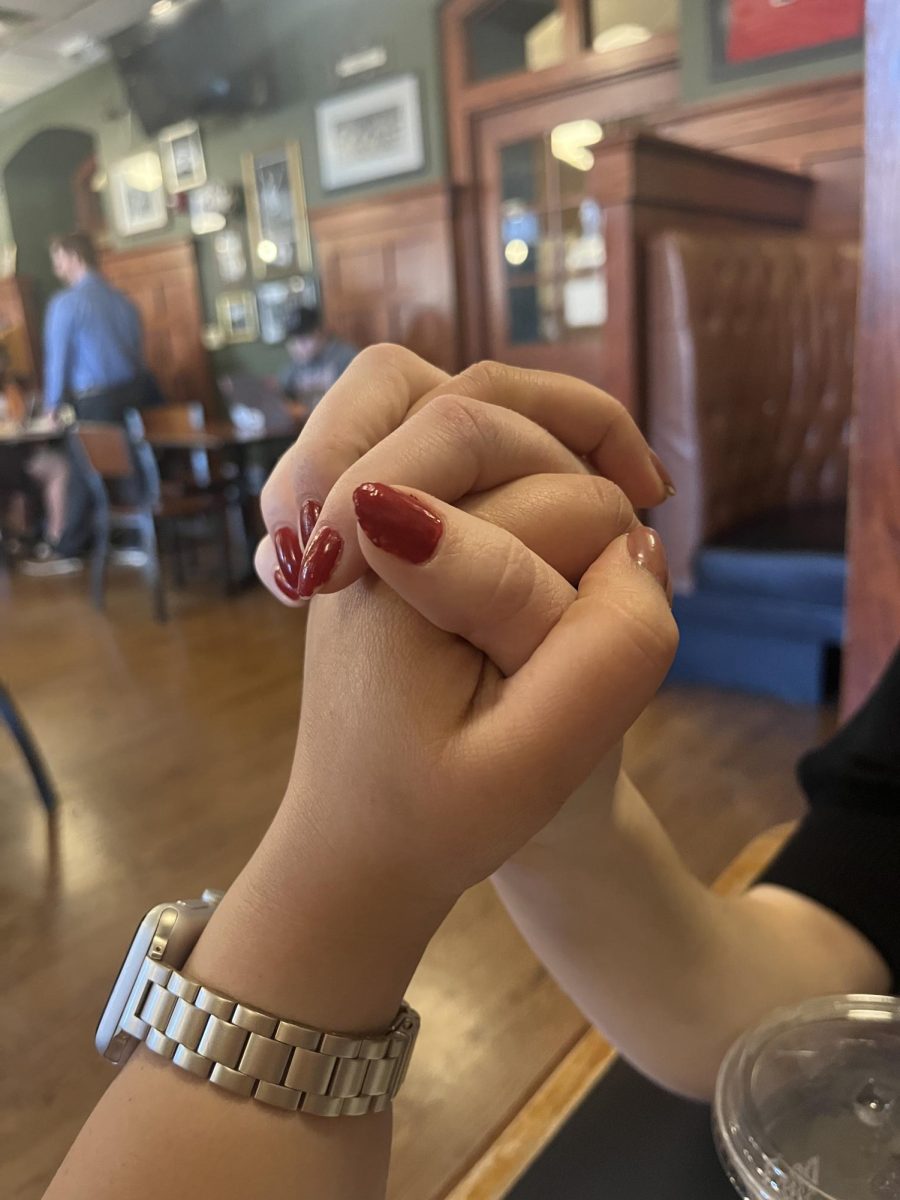






Ever wonder why the term PDA was invented? Well, for starters, PDA stands for Public Display of Affection. For example, remaking the Notebook kissing scene in a booth at Holy Grounds, having nap time on the couches in Haverty and the most unasked for, cuddling during adoration or mass.
My not-so-favorite encounter of PDA was during Mass when, two pews in front of me, a girl used a tissue to clean out her boyfriend’s ears and proceeded to show him the “gunk”. After just receiving the Eucharist, I did not need or want to see this, so I put my head down and prayed for my mind to refrain from thinking about the things I wanted to think about. Was cleaning ears the most necessary thing to do for an adult man in the very moment? NO.
Another encounter I experienced was when I entered an elevator, and it was too late for me to leave before I realized a Care Bear moment was occurring. My existence did not interrupt the moment, goodness forbid. But the lovebirds continued until I made it to my floor. Are there times when PDA is necessary? NO.
My friend Mindy, a senior, was at mass when a couple not far from her was cuddling to the extreme, and he was sniffing her hair…..Excuse me?
My friend Vicky, a senior, was sitting in the lounge in Guadalupe Hall when she heard a couple walking in the hallway, smacking and barking at each other……No, thank you!
My friend Suzie, a sophomore, would walk through her dorm, and a couple would be in the lounge area daily, just cuddling….oh please.
There is nothing wrong with hugging your significant other, saying hello and goodbye, or holding hands as you walk around campus. But there is a time and a place for affection.
From a theological perspective, in Love and Responsibility, Karol Józef Wojtyła says, “A person is a good toward which the only proper and adequate attitude is love.” An action or remark toward another may be intended as an expression of love, but one needs to stop and ask oneself whether it really is love. An action toward another should promote authentic love and not be for the use of the other person. Engaging in physical actions toward another person in the midst of others shows objective reasons toward that person and no awareness of the people around you. Adoration and Mass is a time to be present with others in the presence of the Blessed Sacrament.
From Love and Responsibility, before any form of physical affection, one should ask oneself:
- Does this help me love this person more selflessly?
- Does it respect their dignity fully?
- Would I do this if I truly desired their ultimate good?
- Would I be at peace if this action shaped the entire direction of the relationship?
True love seeks the other person’s good, not just emotional closeness or excitement. It is important to remember when these are the proper moments and places these actions should be taking place, and they should never affect the presence of another person.
“Man becomes an image of God not so much in the moment of solitude as in the moment of communion.”