



















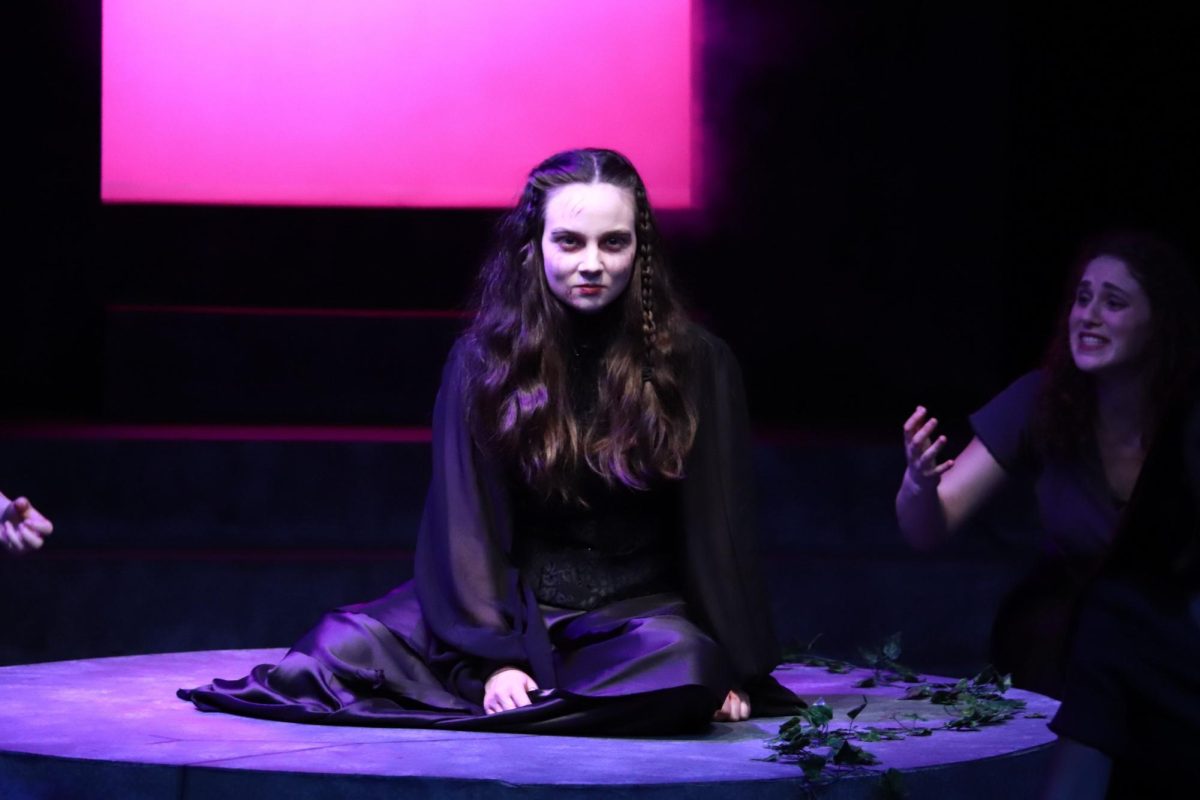






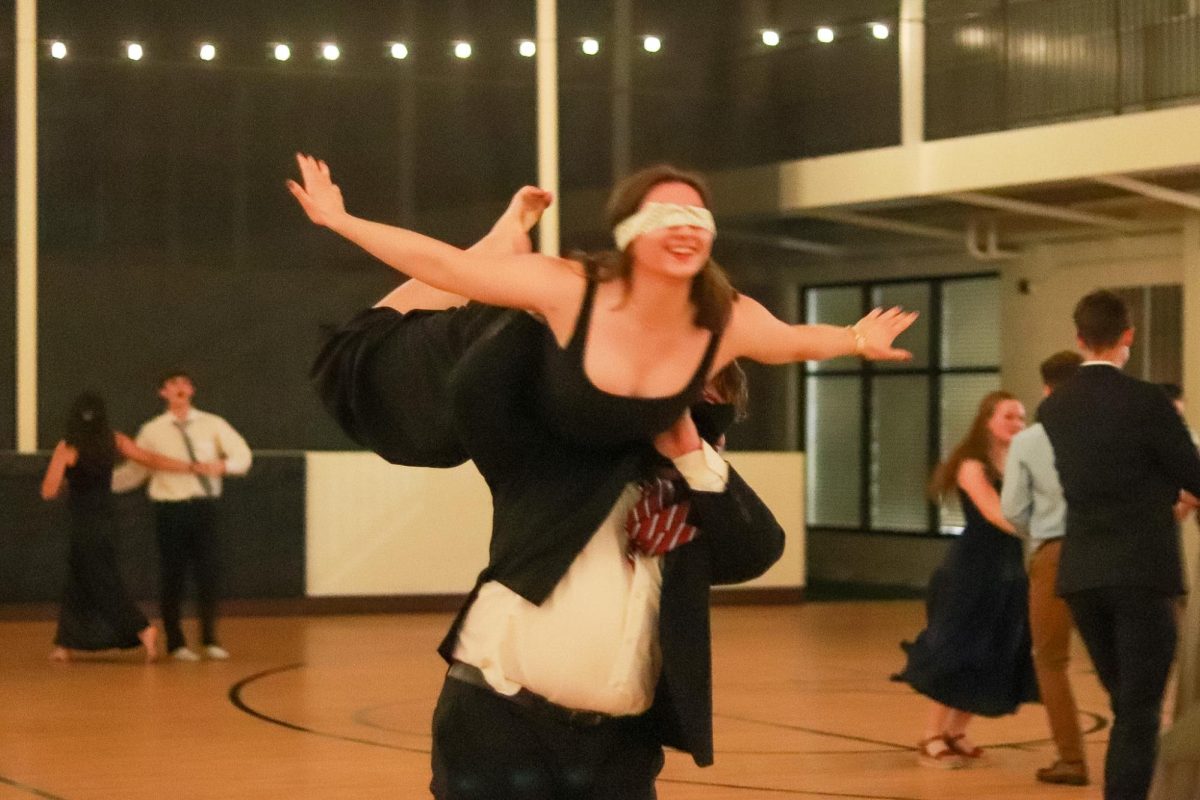


Oscar Wilde’s “The Importance of Being Earnest” is a timeless classic and Benedictine College’s theatre department took on the challenge of bringing it to the stage.
“I have loved Oscar Wilde’s ‘The Importance of Being Earnest’ ever since the first time I read it when I was about 10 years old,” Dr. Lindsay Kennedy, assistant professor in the college’s theatre and dance department and director of the play, wrote in the Director’s Note.
“The wordplay and revelry in cleverness, the absurd antics and escalation of the plot, the way Wilde so drolly points out the hypocrisy and foibles of his society. I was thrilled to have the opportunity to direct it,” Kennedy wrote.
Wilde wrote the play near the end of the 19th century and since, it has been performed in a variety of theatres.
“I chose to lean away from Realism and instead drew inspiration across periods and places to encapsulate the emotional truth of the play,” Kennedy’s note said.
Elizabeth Downey, a student who attended the play, said that her favorite thing about watching BC theatre productions is the community.
“I really like going to Benedictine plays because it’s always all of my friends in the show and it’s always so homey,” she said. “It’s so inviting because I get to see all of my friends.”
Another reason she said she likes to go to Benedictine plays is because of the plays themselves and how they are performed.
“I do learn a lot more about culture and I learn more about plays and I learn more about what good acting looks like, but also at the same time, it’s not too far outside of my comfort zone that I can appreciate it,” she said.
“It inspires me that I can go act too and it looks really fun.”
Kennedy’s note shares how “The Importance of Being Earnest” is a timeless story.
“In this production, we see the continued relevance of this show, not through limiting ourselves by playing it as a period piece but exploring what will make the play feel most beautiful and most vitally alive to our audience. Thus, we play in this production with moments where the props shift from Victorian to Modern.”