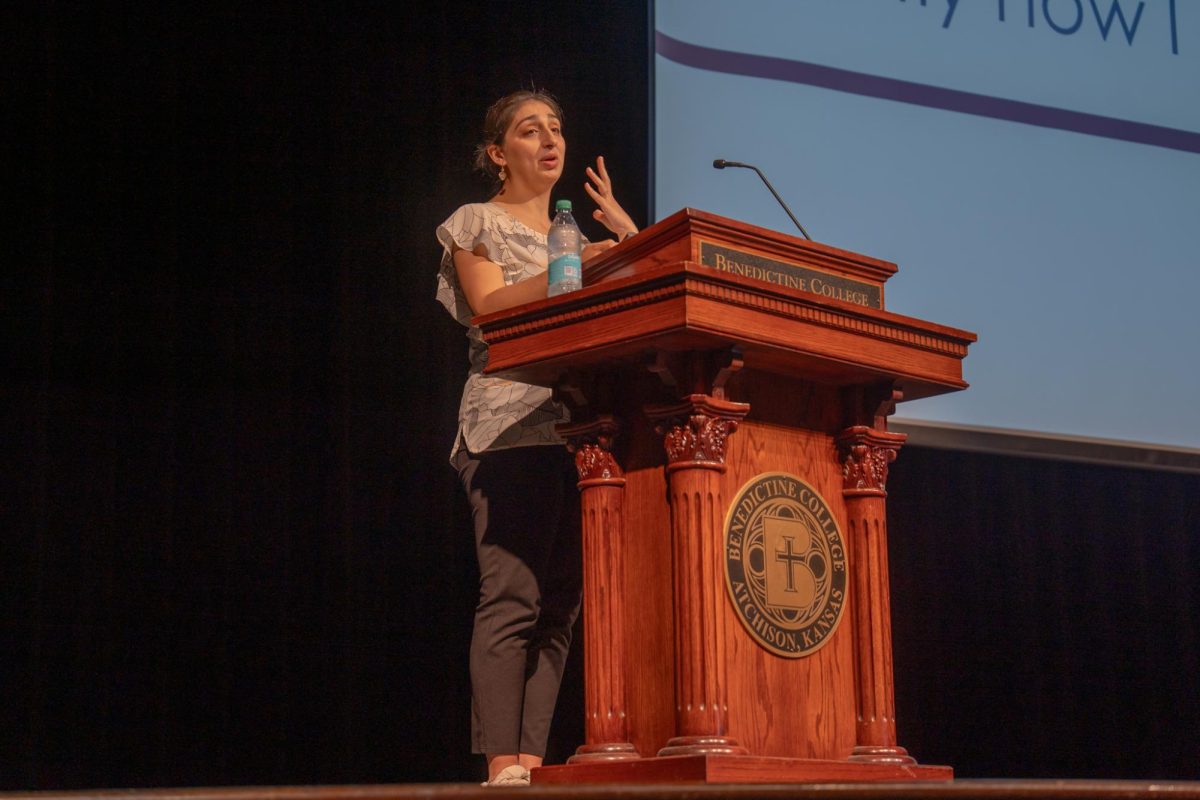







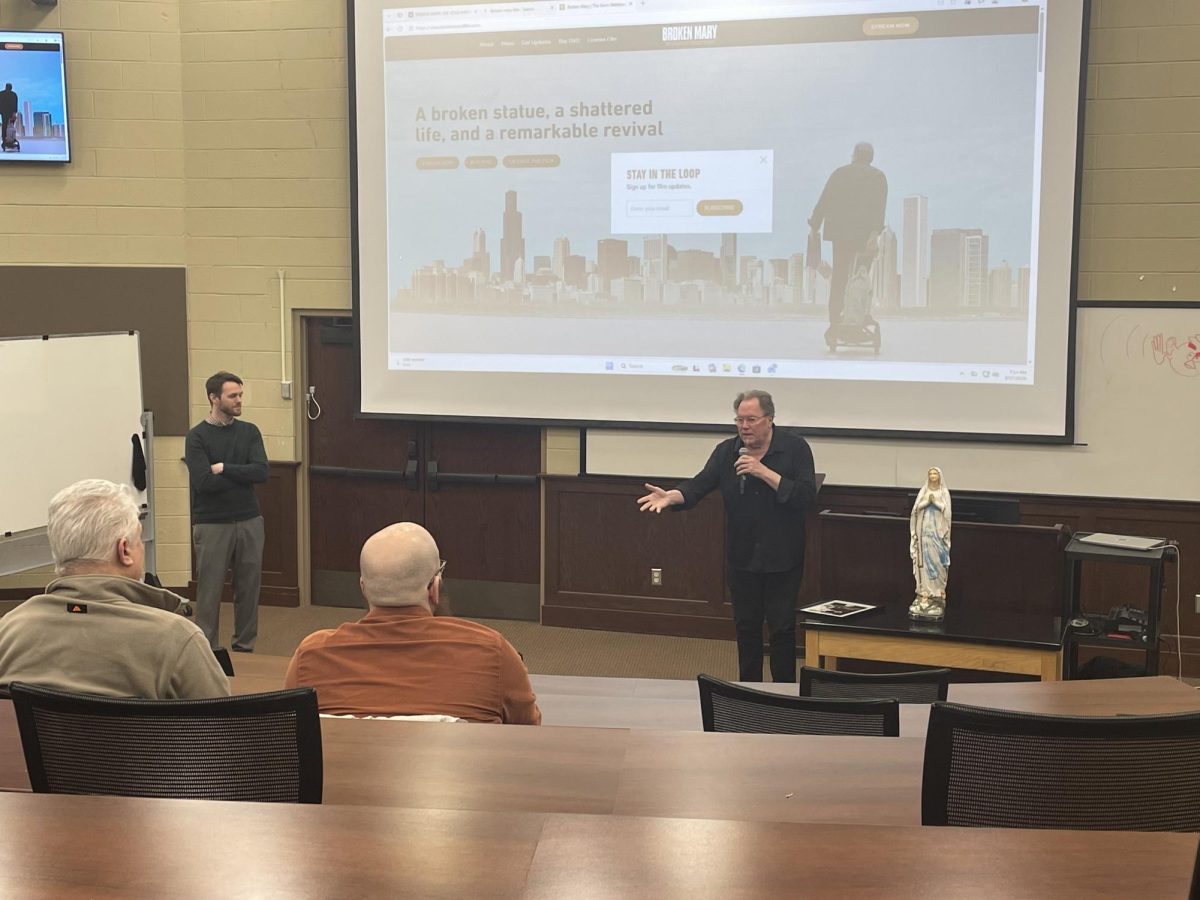











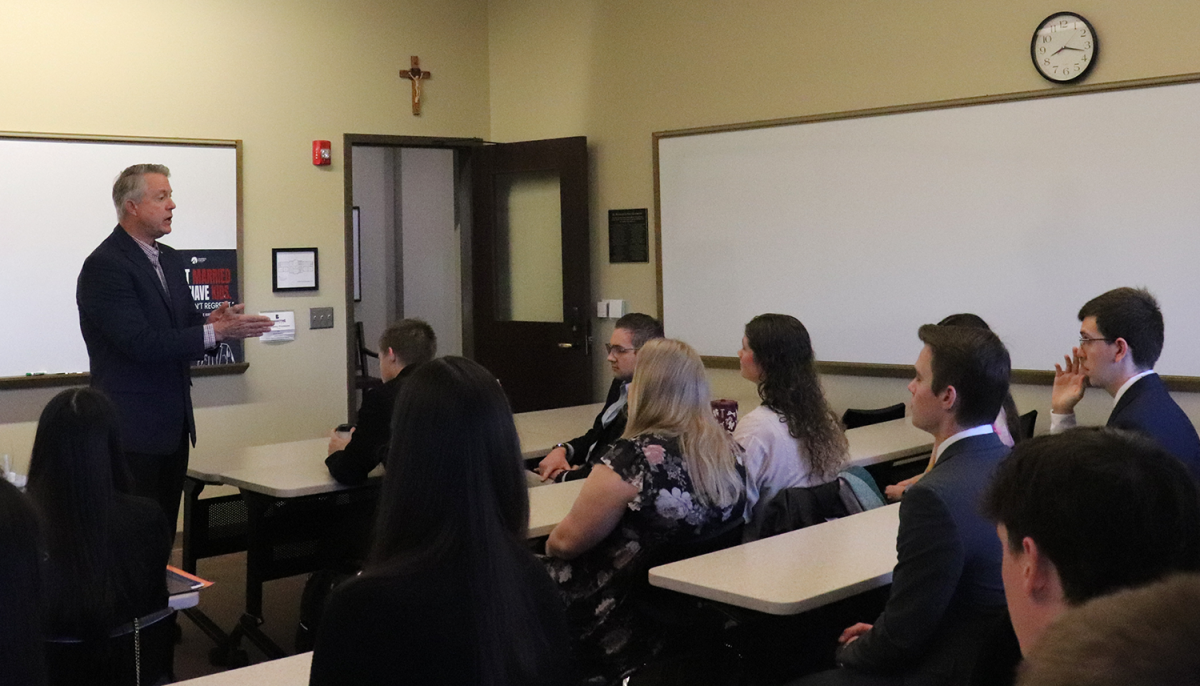
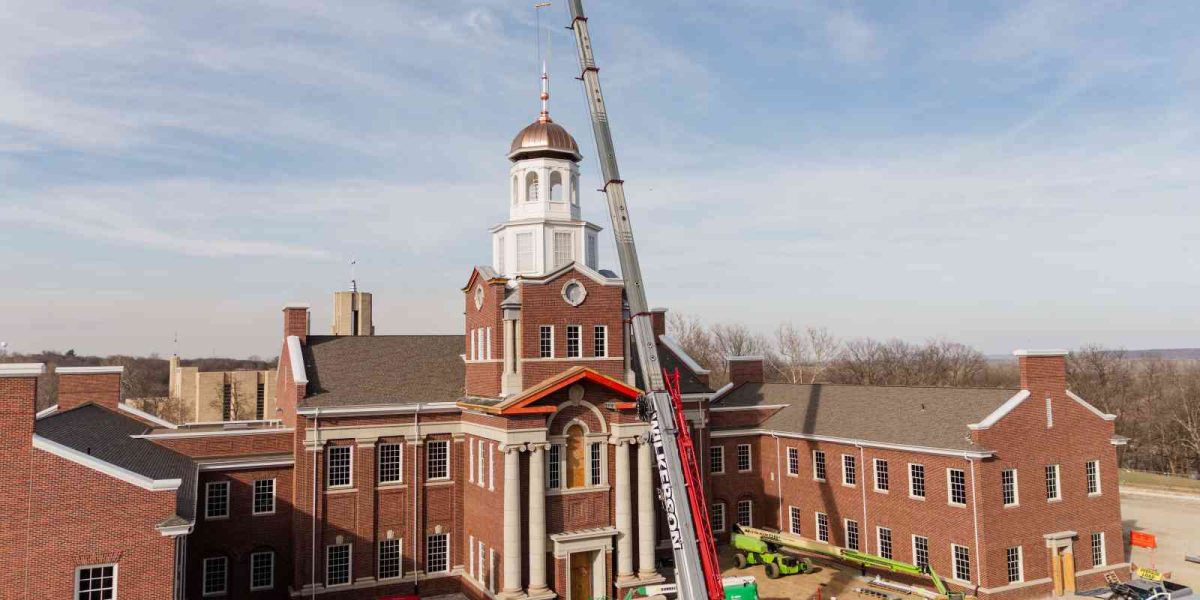

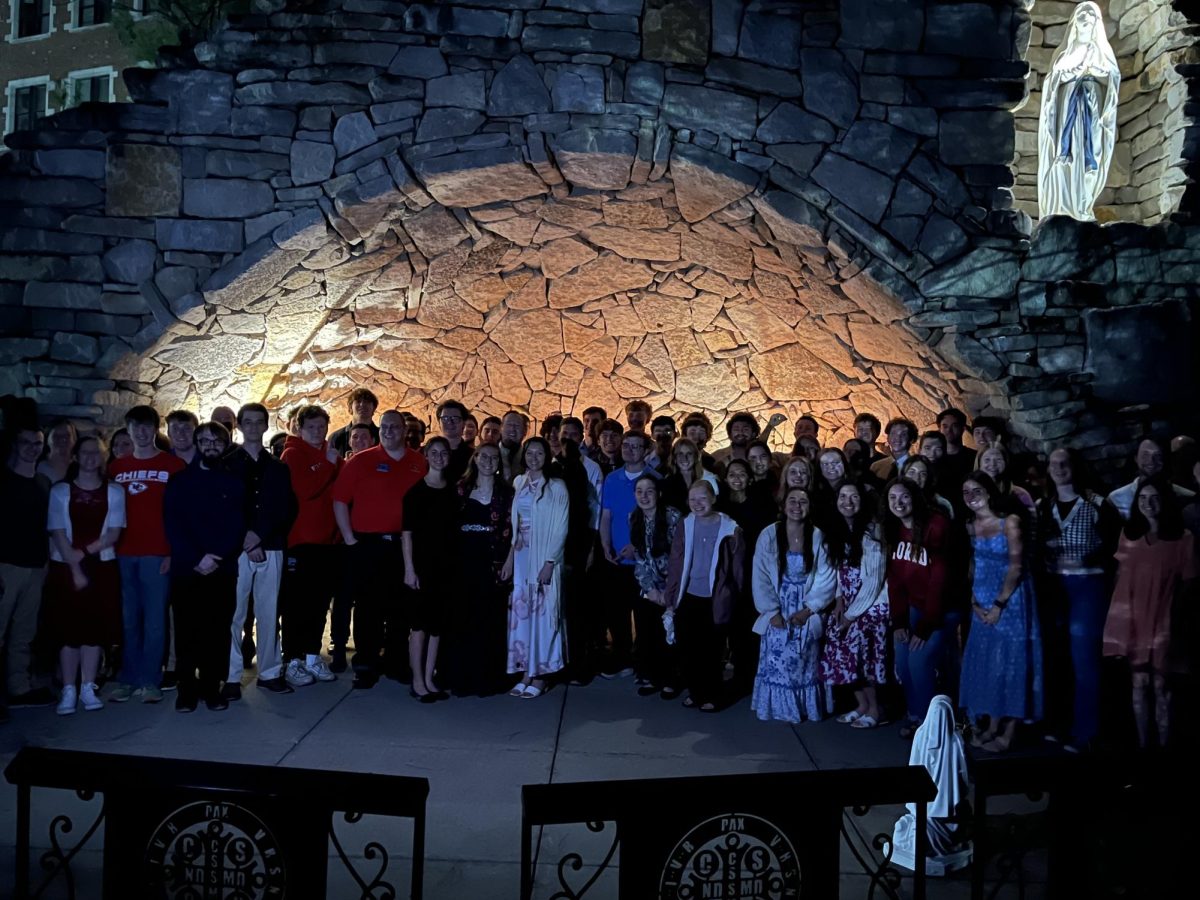








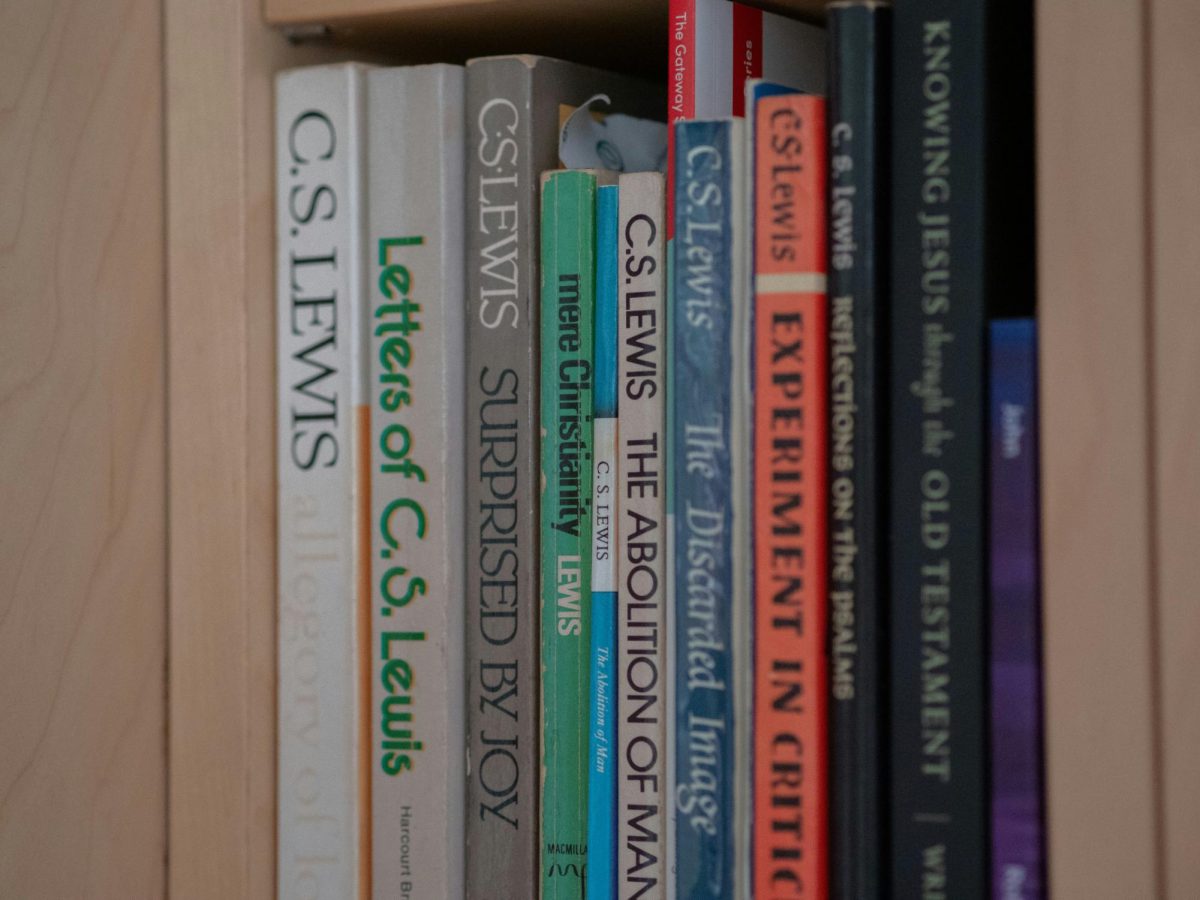









On October 10, Philip Nielsen, a classically trained architect, gave a talk in the McAllister Board Room on the fourth floor of Ferrel Academic Center of Benedictine College where he drew several parallels between the habits fostered in classical architecture and classical education, drawing from the ideas and influence of C.S. Lewis.
Nielsen opened his talk with a discussion on a quote from C.S. Lewis on the nature of words. Summarizing Lewis’ words, Nielsen said, “words that have very precise meanings often get looser and looser meanings. So a lot of people, when they talk about classical education, over time, they just mean, oh, that’s good education or rigorous education or something like that.”
He focused on how both classical architecture and education foster an attention to detail and meticulousness, have a foundation in the Greek and Roman tradition, and an emphasis on learning a few things well rather than developing a surface-level knowledge of many different topics.
In a similar way, he highlights how classical architecture has been subject to the same decay of meaning. As he said, “a lot of people, when they talk about classical architecture, they just mean something like traditional architecture.”
However, like classical education, classical architecture requires an element of translation. To do this well, a student must have a deep knowledge of how something works. In a classical education, this would be a depth of knowledge in language in order to grasp the full meaning of a text and translate it.
“In classical architecture, when we study the columns over and over again, we’re doing something that’s exactly the same as translation in that it is forcing us to slow down and to figure out a level of detail and precision and proportion,” he said.
These tools can later be built upon for future tasks.
Another parallel Nielsen draws between classical architecture and education is the idea of a tutor or teacher as a necessary part of the learning process. Neither field is strictly curriculum driven. Rather, it relies on the knowledge and experience the teacher can pass along to their student.
In a similar way, classical education involves “developing an ear” for the language and classical architecture involves developing an eye for something. “In both cases, it’s very hard for someone to be an autodidact and to just learn that from a book, right?” Nielsen said. “The principle of classical education that goes with that is that a man cannot give what he doesn’t have.”
Sophia Ward, an architecture major who attended the talk, shared her takeaways from Neilsen’s talk.
“When taught architecture from a liberal arts standpoint, one’s goal is to not only create something naturally harmonious and beautiful, but also to draw the person viewing your created structure to contemplate the majesty of God,” she said.
Conversely, architecture learned through a secular perspective will produce a different set of motives and goals, Ward said. For example, rather than recognizing God’s majesty, a person might want to manifest themselves through their work.
Classical architecture brings a deeper result to its finished project. “When architecture is practiced in its true form (by the classical/liberal arts), the resulting buildings will be harmonious, proportional, and beautiful, which are transcendentals that glorify God and exemplify the evolution of human intelligence/thought,” Ward said.
While classical architecture operates in this capacity, other architecture does not and becomes disordered.
As Ward says, “Modern architecture clearly does not utilize the transcendentals and as a result the buildings are often disproportional, ugly, and unharmonious. Architecture students should strive to honor and utilize these transcendentals in their works, which in turn glorifies God.”